The Tale of Three Nativities

Of all the Christmas decorations out there, Nativity scenes are my absolute favorite.

I currently own six different nativity sets, and yet every year when Christmas decorations start to appear in the stores, I have the urge to run out and buy another one or two. Jon doesn’t understand my desire to fill my house with all the beautiful Nativity scenes. I have too many as it is because I don’t have enough space to display all of the ones I own. Yet a part of me wonders if a girl can own too many Christmas Nativity sets.

As I decorated my house for Christmas and displayed my beautiful Nativities, I thought about how my love for Nativity sets started when I was a young girl, as well as some of the beautiful Christmas lessons I’ve learned from setting up Nativity scenes.

These are three of my favorite Nativity stories.

~ ~ ~ ~ ~

When I was a little girl, I knew the Christmas season had arrived when my mother pulled out the Nativity set.

She always got it out in early December. Sometimes we wouldn’t decorate a tree until it was almost Christmas, but the Nativity set was put out early in the season to remind us of the real story of Christmas.

My brother and sister and I played for hours with the Nativity. Ours was made from a very study plastic. It was not cheaply made nor did it look cheap, but because it was so sturdy it was also very kid friendly. Nothing could be easily broken on it — at least not until we were all grown and Brooke’s dog got hold of some of the shepherds and maybe a wise man or two.
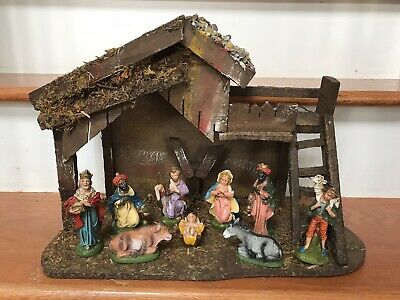
This one is not exactly like the Nativity set my mother owned, but it’s similar. We had more shepherds, several sheep, a couple of camels, and two angels included in our set. Also, the barn did not have a ladder to the roof and the sides were solid.

Each of us had our own way of playing with the Nativity.

I liked to arrange all the characters so that it covered the entire coffee table. Mary and Joseph and the baby Jesus were settled into the wooden barn. The cow and the donkey were either in the creche or nearby. Not too far off to one side were the shepherds and their sheep, while a great distance off to the other side were the wise men with their camels.

Unfortunately, I always had a big dilemma over where to place the angels. There were two of them: one kneeling and one that was standing. I typically put one angel on a little flat section of barn roof, but should it be the kneeling angel or the standing one? Once I made that critical decision, then there was the problem of where to put the other angel. Should it be inside the barn worshipping Jesus or be near the shepherds bringing them news of great joy? This problem drove my Type-A brain crazy every single Christmas of my childhood.

I don’t really recall exactly how my brother Reid played with the Nativity. He probably arranged it so that the shepherds were fighting with the wise men or some other such silly boy nonsense. Or maybe he included extra characters in the scene: Star Wars and G. I. Joe figures guarding the baby or wise men arriving on the scene riding in tiny Matchbox cars. Probably he just spent time heckling me and Brooke over how we set up the Nativity scene and informing us that we did it all wrong.

But Brooke … well, I never will forget how she played with our Nativity set.

She worked hard, crowding all the characters right up into the barn. The pieces were literally crammed inside: shepherds stuffed next to wise men, animals doing handstands in the back corners. It was as if her goal was to get everyone as close to the infant Jesus as possible.

As a child, I never truly appreciated my sister’s way of acting out the Christmas story. I would come along behind her and put a little space between the shepherds and the wise men. However, now that I’m an adult and a parent, I have to admit I’m impressed by my sister’s innate understanding of the real meaning of Christmas.

Lesson 1: Get as close to the babe in the manger as possible.

~ ~ ~ ~ ~

Three years ago, my son Nathan bought me a Nativity set to add to my collection.

It was a pretty glass set, so small and sweet. He found it in a box of Christmas items at the antique store where he worked part-time, and purchased it for my birthday. His boss gave him a pretty good deal on it, and after I opened it I understood why.

Do you see the problem?

This nativity is actually the parts and pieces from several incomplete versions of the same nativity set that have been combined into one very inaccurate nativty. The absurd allotment of characters includes two Marys, three Josephs, and six Wise Men. The shepherds and angels are completely missing altogether.

I have to admit that I laughed the first time I saw it. It is just so crazy!

Every year when I pull it out from the box, I still laugh. And the giggles continue as I put the extra Mary and two of the Josephs on shepherd duty. Usually by the time I collect the Wise Men into a small horde, I am wiping away tears from the absurdity of this mismatched nativity.

And yet, every year I am reminded of a simple but oh-so-important truth as I set up my antique glass nativity, and that is that there is only one baby Jesus. I don’t have that particular piece in duplicates, nor is he missing altogether. And I think that’s really important to note.

Lesson 2: There is only one Savior. His name is Jesus.

~ ~ ~ ~ ~

I’ve always wanted a fancy Nativity set to display in my yard during the Christmas season.

Hobby Lobby has a beautiful outdoor nativity that costs several hundred dollars. Jon and I priced it a couple of years ago, and it’s nowhere near our price range for outdoor Christmas decor.

I have seen those simple Nativity scenes cut from plywood and painted white. These can usually be purchased for a reasonable price. I’ve also found patterns online to make them yourself. We’ve never bought or made one. Probably the biggest deterrent has been that we don’t have a truck to transport this large decorative piece or the plywood to make it to our house.

One year, Jon bought a blow-up Nativity for our yard. We had foster toddlers at the time, and they loved our Nativity. Sadly, it only lasted about three Christmases before it wouldn’t blow up anymore.

This Christmas, I told Jon that I thought of something we might be able to do for our yard and he was glad to help me make this vision come to life.

Together, we pulled out bits and pieces of wood from our shed and constructed a manger plus a cross. It took us just a couple of hours. I love the rustic appearance. Later, we went to Hobby Lobby, where I bought some straw and an old-looking piece of fabric for the swaddling cloth. All together we spent $6 on Christmas decorations for our yard.

I know it’s not a traditional Nativity, but it’s still really special to me. I’ll always cherish Jon’s enthusiasm for bringing my vision to fruition, as well as the time we spent together working on the project. And I think it will be hard for me to forget us searching through the fabrics to find the perfect one for our swaddling cloth.

But what I love the very most is that the manger is empty. Jesus didn’t stay an infant. He grew up and led a perfectly sinless life. He lived just to die and take the punishment for my sins.

Lesson 3: The manger in Bethlehem means nothing without the Cross of Calvary.

Here’s the best news of all: Jesus isn’t on the cross either.

That’s because He rose from the dead. He lives eternally, and through His death and resurrection offers me eternal life too.

How?

It’s simple. The first step is to admit that I am a sinner, incapable of living life without breaking God’s laws. The punishment for not obeying God is death or eternal separation from Him.

Next I believe that Jesus came to live that perfect life without sin, and willingly took my punishment (death on the cross). However, He rose back to life and overcame death. The tomb is empty.

Finally, I repent or turn from living life my own way and surrender to living life God’s way. I confess Jesus to be the Lord and Savior of my life. And when I do that, God says that though I die an earthly death, I will live with Him forever in Heaven.

The best Christmas present out there is the presence of Jesus in your heart and life.

For by grace you have been saved through faith. And this is not your own doing; it is the gift of God.

Ephesians 2:8

If you confess with your mouth that Jesus is Lord and believe in your heart that God raised him from the dead, you will be saved.

Romans 10:9
The 2020 Election Shivers

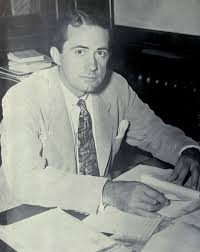
photo credit: en.wikipedia.org

This is Allan Shivers.

If you’ve never heard of Mr. Shivers, don’t worry. It’s probably just proof you aren’t from Texas.

Now, you might be thinking, “Paige, I’m pretty sure you aren’t from Texas either. How did you come to know Allan Shivers?”

You are correct. I am not from Texas. I’m a Louisiana girl through and through.

My mother, however, is from Texas. She is the one who told me about Allan Shivers, just yesterday during our phone conversation. Until then, I’d never heard of him either.

As a born and bred Texan, my sweet mama knows all things Texas:

  • important facts about the great and marvelous people of that grand state, like Sam Houston, Stephen F. Austin, Allan Shivers and so forth
  • the tiniest of details about exciting Texas historical events, such as the Alamo and the Battle of San Jacinto
  • all the words to the Texas, Our Texas, which is the official state song of Texas (aka the Texas National Anthem).

Fun fact: One summer, my mother and my aunts, along with my grandmother, made me and all of my cousins learn the lyrics to the Texas state song. True story. Unfortunately, I didn’t have to sing those words as I stood at attention and saluted the Texas flag every morning at school. Therefore I didn’t retain the lyrics and can no longer prove I am half-Texan.

Enough digressing. Let’s get back to my mom and Allan Shivers.

Yesterday I called my mom.

Typically, I talk to my mom on the phone several times a week. She’s not nearly as chatty as my dad used to be, but I enjoy hearing her voice. Usually we talk about her dog Zayda’s antics or my kids’ college adventures, or what our pastors preached about on Sunday. (This actually takes quite a while because my mother tunes into about 3 or 4 preachers every Sunday morning.) And because we both love to read, every so often we discuss books.

Yesterday my mother told me about a book she is currently reading: Stories from Texas: Some of Them are True by W. F. Strong. My mom said, “It’s fascinating really … at least in some parts.”

Apparently, one of the stories in this book mentioned former Texas Governor Allan Shivers, which reminded my mother that once upon a time she actually met Gov. Shivers in person at a church service back when she was a relatively young girl. She recalled that he had some connections to her hometown of Woodville, TX, the main one being that the library there was the Allan Shivers Public Library but also something about his grandparents being buried in the big cemetery in Woodville as well.

Ever the curious person, my mom decided to poke around on the internet to see if she could discover more about this former prominent Texas politician. This is what she learned:

Allan Shivers served as the 37th Governor of Texas, a position he ascended to upon the death of Gov. Beauford Jester on July 11, 1949. (At that time, Shivers was serving as Texas Lt. Governor, and therefore was next in line as Governor.) Shivers went on to be elected Texas Governor three times in his own right in 1950, 1952 and 1954. He chose not to run as a candidate in 1956 gubernatorial race , and ended his last term on January 15, 1957.

Even though a four-term governorship is fairly impressive, it’s still pretty boring stuff if you aren’t into Texas history. I figured there must be more to this story, or otherwise it would not be worthy of my mother discussing it with me over the phone. As I said, she isn’t the most chatty person around.

I was right. That wasn’t all there was to this story.

You see, Allan Shivers was quite the popular governor. In fact, he was so well loved, that on the 1952 Texas gubernatorial ballot, both the Democrats and the Republicans named him as their nominee.

Yes, you read that correctly.

In the 1952 Texas governor’s race, voters went to the poll and found that they could vote for Democrat Allan Shivers or Republican Allan Shivers. They also had an option to vote No Preference.

My mother doesn’t usually tell tall tales. That award goes to my father. But I fact checked her anyway.

Here’s what I learned: Allan Shivers won the election.

You probably expected that. However, what you might not have expected is that the votes were actually counted. The Democrats even claimed victory, not that it really effected the outcome of the election.

While the Democratic Allan Shivers handily defeated the Republican Allan Shivers, when you totaled up all the votes cast for Governor Shivers in that election, he received a whopping 98.05 % of the votes. Just under 2% of the voters selected the No Preference option.

It doesn’t matter how you look at that 1952 Texas Governor’s race, I think it is safe to say that this is probably one of the few times in all of American history that Democrats and the Republicans agreed upon who would be the best man for the job.

It’s certainly not the case for the 2020 Presidential Election.

Can we possibly be any farther away from the 1952 Texas Gubernatorial Election?

I think not.

The Republicans have their candidate. The Democrats have theirs. Not to mention Third Party candidates and extra characters vying for their place in the election.

Everyone has an opinion. No one seems to agree. And I think if most of us were to be totally honest, we are just disappointed that these are the best candidates America has to offer us.

If you are like me, some aspects of this election leaves you with the shivers. (Pun intended!)

How then should we live out these next 3 weeks?

  1. Pray

Prayer is where Christians should always start.

Begin by praying about who to cast your vote for (Not just for President but for all the offices you are voting for, and not just for this election but for every election.) Even if you think you have already chosen your candidate, go ahead and pray about it. Look intently to see if their platform and campaign promises line up with the Bible.

Pray for each candidate.

Pray for honest, peaceful voting and for clear results.

Pray for our attitudes toward others who may not vote like us.

Let’s all cover this election (and every election going forward) in prayer, and truly seek God’s will for our communities, our state and our nation.

2. Respect

It’s great to be excited about your candidate and there’s nothing wrong with spreading their campaign messages. Actually, let me clarify that statement. It’s fine to promote your candidate unless your methods don’t respect others.

Does your social media post shame or belittle someone who feels differently than you? Are you pointing fingers, making angry comments, or using guilt tactics on people who make it clear they plan to vote for another person? Are you making assumptions that other people haven’t thought about their vote just because they support a different candidate?

The Golden Rule is very simple: Treat others how you want to be treated. I think it’s safe to say that all of us want to be treated with respect.

Respect that others have a right to choose for themselves who to vote for. That respect begins with the assumption that the people in my life probably do not need my help in deciding how to vote.

Remember. You are only responsible for one vote. Your own.

3. Agree

I’m not just talking about agreeing to disagree. I’m talking about actually agreeing.

We may not all agree on who will make the best president. After all, it’s not Texas 1952 anymore.

Even so, I would venture to say that 95% of us regular Americans can agree on many things, such as the following:

  • We are for peace in the land and living in safe communities.
  • We are for seeing our nation thrive and our economy do well.
  • We are for our children and grandchildren growing up in a nation where opportunities abound.
  • We are for America, the land of the free and the home of the brave.

So, instead of bickering over candidates and letting the media’s talking heads further divide this nation, let’s refocus on how we do agree with each other.

4. Vote

The biggest travesty of most elections is the lack of voter participation.

You have a voice. It matters. Get yourself to the polls and cast your vote.

Better yet, be the kind of voter who stays informed. Our elected officials work for us. Speak up. Write letters. Send emails. Sign petitions. Go to your town hall meetings or show up at the state capitol.

If you want to see our country doing better, then it’s time to resolve to be involved.

5. Trust

Finally, let’s remember the Bible says this about our elected leaders:

“For there is no authority except from God, and those that exist have been instituted by God.”

Romans 13:1

No matter who walks away from this election with the right to be President of the United States for the next four years, that person will only have that authority because it was granted to him by God. That’s why we can trust this election to our Heavenly Father. He already knows how it all turns out. He’s got everything under control.

We may not have an easy ballot like those Texans had way back in 1952, but we don’t have to shiver about this election and its results anymore either.

Why?

Because God’s got this. And we can trust this election and its results to Him.

With prayers for peace among us all,

Ripples

The old adage goes, “There’s no place like home.”

That’s probably true, though I might make one small change:

There’s no place like home … except Grandma’s house.

When I was a child, there was nothing more exciting than driving up to my grandparents’ home at 407 Kelly Street in Woodville, Texas. My brother and sister and I could hardly wait for my mom to park the car before we jumped out and raced through the kitchen door, each of us trying to be first!

My grandmother would look up, and say in a delighted voice, “Look here … it’s those Terry children! I was just telling Daddy Red that you should be getting here any minute now, and here you are! I am so glad to see you!”

Baby Paige with Red and Thelma
Photo: My first visit to my grandmother’s home in Woodville, TX.

I spent many summer days at my grandmother’s home. She loved to host a “cousins’ week” for all her grandkids. No parents allowed. Just our grandparents and our great-grandmother and all seven of us grandchildren.

Boy, did we have some fun adventures!

We set up tents and camped out in the backyard … at least until humidity melted us and the mosquitos got us and the night noises spooked us. Then one-by-one we snuck back inside to the comfort of the a/c and real beds and where the chances of meeting up with the boogie man were significantly less.

We swam in the backyard pool until we were too tired to enjoy our popsicles. We walked around the block and down the street to the old cemetery. We picked berries, played loud games of dominos (Chicken Foot was our favorite, but we liked Mexican Train too), and watched old Jimmy Stewart movies in the heat of the afternoon.

Breakfast never arrived without watching cartoons in bed with my grandmother and large mugs of sweet coffee milk served by my grandfather. Lunch was never served without a big plate of sliced tomatoes, and (thanks to my brother Reid) there was always rice with brown gravy for dinner. Bedtime arrived with big bowls of Blue Bell ice cream. (If we picked enough berries, rather than eating them all straight off the bushes until our bellies ached, our great-grandmother would bring over a big berry cobbler for us to eat with that ice cream.)

Galveston trip 1982
Photo: Riding the ferry to Galveston Island, circa 1981

Those summers with our grandparents weren’t complete without a short trip.  Sometimes they took us to Galveston Island, where the best part of the whole day was crossing over to the island on the ferry and feeding the seagulls bread that we tossed into the air. Other times we went fishing at nearby Dam B (later renamed Martin Dies, Jr. State Park) near Jasper, TX.  On other occasions they would take us to visit my grandfather’s family in Lufkin.

My grandmother was a talented seamstress. She always had multiple sewing projects going on at the same time, as evidenced by the pile of bright fabrics by the sewing machine and the perpetually set-up ironing board next to it.

My cousins and I often wore matching holiday dresses. I was the oldest so I wore my dress only one season. My poor baby sister had to wear her dress, then my cousin Steffi’s dress, and later on my dress. If you look at old family photos, it seems that my sister Brooke only ever owned about two dresses her entire childhood.

Thelma Paige Steffi
Photo: My cousin Steffi and I wear our matching dresses, circa 1975.

My grandmother loved to host “hot water tea parties” with her granddaughters. She would cover a large cardboard box with an old sheet. Next, my grandmother had us set the table. We would pick a small bouquet of flowers from around the yard and set it in a vase on the center. Then we took the tiny tea set from her china cabinet and set out the cups and saucers, the sugar bowl with tiny sugar cubes, the milk in the pitcher. Meanwhile, my grandmother added some hot water (or rarely a weak tea) to the teapot. She put a plate of pink sugar wafer cookies on a pretty plate and set that on the table too.

Now we were all ready to enjoy our tea party.  My grandmother acted as hostess. You had to wait for the hostess to serve the food before you could eat, and no one could slurp their tea. Sometimes we brought our baby dolls, and practiced introducing our “children” to our friends.

Later on, when I was about 10 years old, my grandmother gave me about five old teacups. I kept them on a shelf in my room. Several years later, I decided I liked them so much that I started collecting teacups. Each time I look at my beautiful teacups, I am reminded of my grandmother and her hot water tea parties.

My grandmother also introduced me to England’s royal family.

Okay, she didn’t actually introduced me, but she is the one who turned me into an Anglophile, or lover of all things English.

During my teen years, my grandmother and I often discussed the antics of Princess Diana and Fergie, Duchess of York. Years later, when I watched the movie The King’s Speech, I recall how my grandmother had actually shared this story with me, recalling reading about many of these event in the newspapers. One of my dream vacations is a trip to England. I ever get to travel there, I know I’ll wish I could return home to share all about my English adventures with my grandmother.

There is so much more that I could write about my grandmother … for example, she was an avid traveler who visited 49 of the 50 states in this great nation, but loved Texas best of all. She enjoyed cooking and crafting and reading biographies. And while all of those things are special to me (and the rest of us who loved her), there is truly only one important thing about her life and that is my grandmother’s love for Jesus.

Thelma Kay Easter 1948
Photo: With my mother, her oldest daughter, on Easter Sunday 1948, perhaps a year after her salvation . 

Early in their marriage, my grandparents weren’t big church attenders. However, shortly after the birth of their first child (my mom, Kay), another couple began to invite them to come to church. My grandparents decided to go.

One church service lead to another and another. Listening to all the preaching had gotten my grandmother to contemplating life and whether or not there was a place for God in her’s.

One a stormy night in 1947, as she rocked my infant mother in her arms, all those thoughts about God and trusting Him just overwhelmed her. In the middle of that thunderstorm, my grandmother decided that she was going to follow God.

The next morning, she told my grandfather that she intended to join the church and be baptized the following Sunday. According to her, he didn’t say a word and the subject never came up again during the next few days. She assumed that he wasn’t going to try to dissuade her from joining the church, but he wasn’t going to join her either.

On Sunday morning, as the music for the invitation began, my grandmother moved to step out into the aisle. My grandfather stepped out of the pew, too … but she thought it was simply to allow her to get out. Then, to her surprise, my grandfather took her hand in his. Together they walked forward to join the church. They were both baptized and spent the rest of their lives dedicated to their faith in Jesus Christ and in Christian service.

From leading GA’s (Girls in Action missions) when her daughters were young to traveling the nation building churches with the Volunteer Christian Builders during retirement to knitting prayer blankets when she was homebound, my grandmother loved sharing her faith in her Savior and using it to bless others.

Her one decision, made as a young mother,  has rippled through my family through the generations, paving the way for the salvation of her husband, her daughters, her seven grandchildren and her 29 great-grandchildren.

Her’s is a legacy worth leaving. Her’s is a life well-lived.

Thelma Kay Wedding Corsage
Photo: My grandmother pins a corsage on my mother’s dress the night my parents got married.

All grandmothers are made of gold … but mine sparkles! ~Unknown

And sparkle, she did!

My grandmother was a beautiful, vibrant woman with a bright mind, big heart, and a bold personality.

Yesterday, she left this earthly home for her heavenly one.

I sort of imagine her walking through the pearly gates, stepping onto the streets of gold, and hearing her Savior say, “Look here … It’s Thelma McGee! I was just telling the Father that you should be arriving any minute now, and here you are! I am so glad to see you!”

I will miss her.

young Thelma
Photo: Thelma Stinson McGee, November 12, 1926 – July 8, 2019

The Trouble with Judas

I wish Judas hadn’t killed himself.

You know the Judas I am talking about. Judas Iscariot. The disciple who betrayed Jesus for 30 pieces of silver.

The Bible tells us he killed himself. Every time I read through the accounts of Jesus’ betrayal, crucifixion, and resurrection,  I always find myself wishing that Judas hadn’t made the choice to end his own life.

But he did … and it bothers me.

~~~   ~~~   ~~~   ~~~   ~~~

Recently I read through Matthew 26 during my morning devotional.  This portion of Scripture gives quite a bit of insight into Judas.

For many years, I thought of Judas as some bumbling sort of soul, the kind of person who could easily be duped. In regards to his betrayal of Jesus, I assumed perhaps he was manipulated by the Jewish leaders for purposes much greater than anything he could aspire to do on his own.

Maybe he was a loser looking for friends in high places.

Perhaps he was a people-pleaser who couldn’t figure out a way to say no.

I wondered if he might be a young guy just looking for validation. 

Whatever his personality type, I always figured Judas sort of just “fell” into an unintended role as part of the Pharisee’s plan to get rid of Jesus.

According to Matthew 26, nothing could be further from the truth.

 Image found at Image Gallery: Miercoles Santo

Turns out, it was Judas who went to the chief priests.

Then one of the Twelve – the one called Judas Iscariot – went to the chief priests and asked, “What are you willing to give me if I deliver him over to you.”

~Matthew 26:14-15

It wasn’t the priests who were looking for an insider willing to betray Jesus. Rather, Judas was the one who took the first step. He set the betrayal in motion himself.

For the love of Christ, why did Judas do that?

Some people might use that phrase flippantly, but I’m serious.

Judas had just spent three years of his life walking all over Judea with Jesus. He had seen all of those miracles. He was there when the lame man walked, when Lazarus was raised from the dead, and when Jesus walked on the water. He had seen the miraculous healings. From the Sermon on the Mount to the feeding of the 5000, Judas heard and saw it all.

Didn’t he grow to love Jesus during that time? If so, then why would Judas betray Him?

Maybe it was …

For the love of money.

There’s no other reason that makes sense. Especially when you consider everything the Bible has to say about Judas and money.

You don’t have to dig around in the Gospels very far to figure out that money must have been extremely important to Judas. He was, after all, the treasurer for Jesus and the disciples, which meant he was in charge of the money bag.

We also know from Scripture that Judas was prone to helping himself to the money that was in that treasury. (John 12: 6) I can’t imagine that Jesus and his disciples had a lot of money to begin with, but Judas was sneaking out small amounts of it here and there for his own use. I’m sure he thought what he took would never be missed, but it appears that the others were aware of his tendency to take that which wasn’t rightfully his.

It seems that Judas had a problem money.

So money-loving Judas decided to go see the chief priests to barter for Jesus. The chief priests offered Judas 30 pieces of silver in exchange for Jesus’ betrayal. I have always assumed those coins must have been worth quite a large sum. But (as we have already seen), my assumptions aren’t always correct.

I did some research because I was curious just how much money Judas earned as Jesus’ betrayer.  And what I learned is that Judas was most likely paid with Tyrian shekels, which was the type of currency used to pay the Temple taxes. In those days, every Jewish male over the age of 20 paid a Temple tax, which was the equivalent of two days wages or 1/2 shekel.

So if 1/2 shekel was worth two days wages, then 1 shekel would be worth four days wages. Do the math and 30 shekels of silver would be worth 120 days wages. Therefore the coins Judas received in exchange for the betrayal of Christ would be worth approximately one third of a year’s salary.

Not too shabby.

Unless you read the previous passage in Matthew 26 … .

Start reading in Matthew 26:6 and you’ll come across the story of the woman who anointed Jesus with the fragrant oil. It’s another very familiar passage. According to the Gospels, Mary (sister of Lazarus and Martha) came into a dinner party and poured out an entire alabaster jar of oil on Jesus’ head.

This oil was very costly. In fact, in another Gospel’s version of this same event, Judas himself tells us exactly how much this oil was worth:

But one of his disciples, Judas Iscariot, who was later to betray him, objected, “Why was this fragrant oil not sold for three hundred denarius, and given to the poor? It was worth a year’s wages.”

~John 12:4-5

Later in the passage, we learn that Judas wasn’t known for being a man who cared about the poor and needy. His life of sneaking and stealing that which didn’t belong to him was known by those in Jesus’ inner circle. They recognized in this situation that Judas wasn’t concerned about money being used to help others.

So what was Judas concerned about? Why did he protest?

To Judas, anointing Jesus with an entire alabaster jar of fragrant oil was a nothing more than pointless extravagance. He didn’t see the oil being used in a sacrificial act of worship from a loving heart. When the precious oil was poured over Jesus, Judas could only see a frivolous waste of money. Money that could have lined the bag in which he freely dipped his hand.

It’s interesting to me that these two passages can be found side-by-side in the same chapter of Matthew. One tells of worship and sacrifice. The other is filled with betrayal and greed.

Mary anointed Jesus with oil. As she broke the bottle, out flowed the precious oil which could have been sold for an entire year’s salary. Yet, she knew the worth of the oil couldn’t begin to compare to the worth of Jesus Christ.

But to Judas, Jesus Himself was worth only about one third of a year’s salary.

Perhaps more accurately … a third of a year’s salary and his own soul.

Most Christians are familiar with how Jesus sent Judas away from the Passover table. Later, Judas led the Roman soldiers to the Garden of Gethsemane, where he betrayed Jesus with a kiss.  Jesus was bound by Roman guards and led away like a criminal.

I wonder what Judas was expecting as he stood in the garden and watched Jesus being led away. Did he have any idea that Jesus would be condemned to die?

The gospel of Matthew (chapter 27, verses 3-5) tells us the once Jesus was sentenced to crucify, Judas was “seized with remorse.” He actually went to the chief priests to return the money.

“I’ve have sinned,” he said, “for I have betrayed innocent blood.”

~Matthew 27:4

The priests didn’t care about Judas’ admission of guilt or confession of Jesus’ innocence.

Matthew’s gospel says that Judas threw the money into the temple and went away to hang himself.

This is what boggles my mind … if Judas knew he had done something terribly wrong, why didn’t he confess it to Jesus? Why didn’t he seek forgiveness from the one he wronged? After three years, didn’t he know the heart of Jesus? Didn’t he know he could pray to God and receive mercy?

So what kept him from seeking out forgiveness?

Pride?

Probably. It’s what keeps most of us from going to God and seeking forgiveness. At least, pride is what most often keeps me from admitting my sin.

This is why I wish Judas didn’t hang himself: Feeling remorse for our sins doesn’t do us any good.

It never has. Go all the way back to the book of Genesis and there in the Garden of Eden we read about Adam and Eve and the very first sin. What was the immediate reaction of Adam and Eve? Remorse. They experienced was remorse for their actions, and then they tried to hide their sin from God by sewing clothes from fig leaves.

Those first remorseful actions didn’t work for Adam and Eve. 

Remorse didn’t work for Judas either. 

Remorse still will not work for us.

So the lesson from Judas is to recognize that remorse for our wrongs doesn’t solve the problem. There needs to be more than just regret and remorse over our sins.

We need forgiveness. How do we get that forgiveness? It comes through the confession of our sins to God.

We also need repentance, which is simply the act of turning away from the wrongs we have done as we commit to live our life according to God’s way. (It doesn’t mean we never sin again. Far from it! It just means we look to Jesus as our example as we strive to live our life according to God’s way.)

I believe if Judas had confessed to Jesus and asked for it, he would have been forgiven. There would have been no need to hang himself in shame.  He would have received grace and mercy. He would have the promise of everlasting life.

Because that’s what the cross is all about.

For when we died with Christ we were set free from the power of sin. And since we died with Christ, we know we will also live with him. We are sure of this because Christ was raised from the dead, and he will never die again. Death no longer has any power over him. When he died, he died once to break the power of sin. But now that he lives, he lives for the glory of God. So you also should consider yourselves to be dead to the power of sin and alive to God through Christ Jesus. ~Romans 6:7-11

So if the Son sets you free, you are truly free. ~John 8:36

Penelope Goodson Daniel

Last week, I introduced Theophilus Daniel and shared a photo of a square of homespun fabric he made for his granddaughter sometime in the mid-1800’s. It’s said that he owned a flock of sheep, as well as a spinning wheel and a loom. The details of the fabric have long been lost to history, but our family assumes that Theo used wool from his sheep to spin thread and then weave the fabric.

After I wrote the story of Theo, I began to wonder about his wife, Penelope, and if there were any interesting tales from her life.

Penelope Goodson

Penelope Goodson was born in 1874 to James and Jane Goodson of Darlington, SC.  Her father fought in the American Revolution.

In 1803, Penelope married Theophilus, a man two years her junior. They were living in South Carolina at the time. However, two years later in 1805, her first child was born in Washington, GA.

Over the next 25 years, Penelope seems to have spent a lot of time doing two things: giving birth and moving. Here’s a list of her children, along with the years and places of their birth:

Washington, Georgia

  • Ephraim Elias (1805)
  • Abel (1808)
  • Jane (1810)
  • William Eli (1811)

Rome, Georgia

  • James (1812)
  • Sarah Jane (1814)
  • Josiah Goodson “Squire” (1816)

Crenshaw, Alabama

  • Elizabeth “Betsy” (1817)
  • Leonard (1818)

Butler, Alabama

  • Theophilus Jackson (1822)
  • Martha (1822)
  • John Adams (1825)
  • Zachariah (1827)
  • Penelope Louisa (1830)

That’s 14 children and 4 moves!

According to the Alabama Department of Archives and History (Alabama Surname Files Expanded, page 55), Theo and Penny came to Alabama by way of the Old Federal Road. They settled in what was then Creek Indian Territory. This same source also noted that the first acreage they purchased is now located within the city of Montgomery, AL.

Theophilus and Penelope were married 62 years. She died in 1873 at the age of 89 years old. She had outlived her husband by 8 years.

Whenever I read about Theo and Penny, I can’t help but think of what an interesting lifespan they both had … born prior to the United States Constitution being ratified and dying after the end of the Civil War.

During that period of American history, our nation was growing and expanding across the continent. And even though Penelope and her husband didn’t manage to go all the way to the West Coast, they did joined thousands of others in settling across the middle areas of the South.

paige-signature

This post is part of a 52-week series on sharing the stories of my ancestors.Fifty-two Ancestors


Write It Down

My one word focus for 2020 is WRITE.

This weekend, I spent some time creating a vision/encouragement board for desk area. I wasn’t sure how it would turn out when I started, but I love it! It has a fun vibe that makes me eager to plow ahead with the work I feel God has called me to do.

On the board, you may notice two handwritten squares. One of them boldly states, “I am a WRITER.” I’ve never called myself a writer before, but I decided that starting in 2020 I would use this descriptor.

Last Wednesday at our church supper, a rather precocious 5 year old girl was sitting at the table where Jon and I were eating. She peppered us with all sorts of questions. She asked Jon what sort of job he had, and when he told her that he was a geologist, she nodded her head as if she knew exactly what that meant. Then she turned to me and asked, “What is your job?”

I almost said, “I am just a mom.” But I caught myself.

I’m a writer,” I said.

A what?

A writer. I write books.

There was a moment of silence as she considered my words. Then she asked, “Do you mean librarian?”

I have to admit that even though the line of questioning was making me feel a bit like I was about to be accused of just pretending at what sort of job I had, I was impressed with this kid’s vocabulary.

“No,” I said. “I’m not a librarian. I am a writer. I write the words that you read inside the books at the library.”

“Oh … a writer.” She sighed, picked up her fork and said, “That’s a weird job.”

Weird or not, it’s what God has called me to do.

~ ~ ~ ~ ~

In 2012, I attended two writer’s conferences.

Up until this point, I wrote as I felt the urge. I had a blog, but it was mostly just a hobby for me. But then my parents insisted I go to a local writer’s conference one weekend in March. I couldn’t say no as they paid the conference fee and kept all five of my kids for the weekend. I spent the entire conference wondering why I was there.

But, when it was over, I met a sweet friend named Christie … and somehow we ended up in Michigan three months later at a big national writer’s conference. Talk about being out of my league! I left there questioning what it was God wanted to do in my life in regards to writing.

All that summer, I prayed and asked God, “Do you want me to write?” Over and over and over I prayed and asked for direction.

That September I turned 40.

Remember Christie, my writer friend? Well, she sent me a box of gifts to open, one gift for each day of the week of my birthday. Each gift was wrapped individually and had a tag with a Scripture reference.

I had been opening gifts for three or four days when my actual birthday arrived. That morning, the kids excitedly asked if they could pick me a gift to open from the box. When I agreed, they brought me a gift … and when I opened it, I found a beautiful new ink pen, tagged with the Scripture Psalm 45:1.

My heart overflows with a pleasing theme;  I address my verses to the king; my tongue is like the pen of a ready writer.

Psalm 45:1 (CSB)

And that was when I knew God was calling me to be a writer.

~ ~ ~ ~ ~

It’s been 7 years since that September morning. Honestly, I haven’t done much with that calling other than blog. I tried but as a homeschooling mom I often felt pulled in many directions. Ask any stay-at-home mother and she will tell you it’s a full-time job!

Last year, I began to feel like I didn’t have a job anymore. One by one, my teens were leaving the home for college and jobs. With just two left at home, I had all sorts of free time on my hands. I felt confused about what I should do. Go back to teaching? Take in more foster children? Volunteer at some worthy place?

And then God graciously reminded me … He already gave me a job. I’m His writer. I work for Him.

At first I felt guilty. Had I just been wasting time the last seven years? Had I neglected my calling?

And this is the verse God gave me:

Look, I am about to do something new; even now it is coming. Do you not see it? Indeed, I will make a way in the wilderness, rivers in the desert.

Isaiah 43:19 (CSB)

In the Bible, the number seven represents perfection or completion.

I don’t think the seven years between my calling to write on my 40th birthday to this new season in my life was wasted. God was preparing me and growing me. Instead of feeling confused and uncertain, I am confident in knowing my calling, and eager to do what God has given me to do.

It’s January 2020 … a new month, a new year, a new decade. And for me, it’s the start of a new career.

I am a writer.

Thus says the Lord, the God of Israel: Write in a book all the words that I have spoken to you.

Jeremiah 30:2 (ESV)

All the Pretty Girls

The first time I ever remember having a distinct feeling that I wasn’t a pretty girl happened on my very first day of kindergarten.

A faded photo taken that morning shows me standing at the end of our driveway, waiting on the school bus. Dressed in denim vest, red shirt and bell-bottom jeans with embroidered pockets, I am clutching a school box filled with crayons and pencils as I smile a confident, snaggletoothed grin at my mother. A sweet Dorothy Hamill haircut framed my chubby face.

Just a couple of hours later, after learning how to recite the pledge to the American flag,  there was a knock on the door of the Kindergarten classroom. The teacher answered, and in walked the principal with another student, a little girl named Charlotte.

Not only was Charlotte fashionably late, but she was also wearing the fanciest red dress I had ever seen. Adorned with yards and yards of ruffles, her skirt flounced airily as she walked past my desk; her black patent shoes made a soft clicking sound on the hardwood floors.

The following day Charlotte wore another dress, just as fluffy and frilly, but in a different color. In fact, during that first week of school, Charlotte showed up at school each morning wearing a more beautiful dress than the one she had worn the day before.

It didn’t take long before I became enchanted with Charlotte, who looked just like a living doll. I had never seen anyone so pretty. I loved the way her black curls formed perfect ringlets. My thin, straight hair never held a curl, no matter how many hours it was left in those hated pink, foam rollers.

One afternoon, I confided to my mother how I thought Charlotte must be a real princess. My mother laughed as she patted my head and stated emphatically that there definitely were not any princesses attending my school. But, in my mind’s eye, all Charlotte needed was a tiny tiara on her head and the vision would be complete.

However,  I didn’t tell my mother everything I was thinking or feeling in regards to Charlotte … like how ugly I felt in my new cotton shirts and stiff blue jeans, or that my deepest wish was to be pretty and dainty, the way Charlotte looked in her lavish dresses.

I might have been only five years old, but already I felt like…

I wasn’t a very pretty little girl.

Confession time.

I can count on one hand the number of times I’ve felt pretty.

During fifth grade I won a small beauty contest, the sort that is more fundraiser than pageant. The winners didn’t receive crowns or trophies, just ribbons. Even as I stood on the stage holding the 1st place ribbon in my hand, I felt like the results were somehow a fluke, fearful the judge might raise her hand and point out the real winner.

The following week, my dance teacher asked if anyone wanted to share happy news with the class. I raised my hand and when it was my turn told how I won a beauty pageant. All I really wanted to hear was that she agreed with the judges, for her to confirm that I was indeed a pretty young lady.

Instead, my dance teacher smiled and suggested I might like to ride on the “Beauty Queens’ Float” in the upcoming Christmas parade. “Of course, you wouldn’t be able to ride on the dance school float … but if you have a crown and a sash, I believe a spot could be found for you to ride with our other local pageant winners.”

Don’t ask me how, but I managed to borrow a crown and get a sash … and as I rode through the streets, smiling and waving, I felt something I couldn’t remember feeling before.

I felt pretty.

~ ~ ~ ~ ~

Society tells us that gorgeous women are thin with a headful of thick, flowing hair, and flawless, sleek skin.

Women with PCOS often struggle with weight issues, male-pattern baldness, extra facial and body hair, severe acne, skin tags and psoriasis. This genetic, hormonal disorder strips away all the physical feminine qualities, and sadly there is no cure or quick fix or answer to unraveling this medical mystery.

The women who live with PCOS often struggle with anxiety or depression or low self-esteem. Perhaps a lot of that is driven by a bad body image because a woman with PCOS is rarely going to match society’s standard of beauty.

And yet, how can we possibly feel pretty when PCOS steals away the very things we are told makes a woman pleasing to look at?

~ ~ ~ ~ ~

I am wonderfully made. ~Psalm 139:14

Confession time … again.

I don’t think — no, the truth is I don’t believe — I am wonderfully made.

I look at my reflection in the mirror, and all I see is me. My physical flaws. My less-than-perfect features. The bald patches in my hair. The flaky skin on my face. A woman who is far from thin and hasn’t worn a swimsuit in more than a decade.

Oh, how I long to see myself as pretty … yet most of the time I feel so much less than that.

And this presents a problem because the Bible tells me that I am wonderfully made by my Creator.

As a Christian, I must ask myself this question:

If God says I am wonderfully made, and I have judged my body to not be a worthy creation, then which of us is wrong? 

Either God is a liar (and how can I be a Christ-follower if I think such a thing), or I must be using the wrong standard for beauty.

One thing is certain.

Both God and I are not correct on this issue.

~ ~ ~ ~ ~

The LORD does not look at the things man looks at. Man looks at the outward appearance, but the LORD looks at the heart.                 ~1 Samuel 16:7

It’s true. Humans tend to focus on outward appearance.

We like to believe we aren’t biased, that we don’t use physical features as a way of judging others. But the evidence says otherwise.

Not long ago, a friend (whom I really love) made a comment about one of my teen girls. “She’s become so pretty, now that she is wearing make-up and fixing her hair and losing a little weight … not that you have to do those things to be beautiful …  but you know what I mean.

Yes. Yes, I do. I’m human too, and somehow (as much as I hate to admit it) the way someone looks matters.

But not to God.

He looks at our hearts and knows our minds … and loves in spite of all the negative, mean-spirited, ugly feelings and ideas we have. His measure for beauty is far above our own earthly ideas.

So what does God have to say about being beautiful?

Here are a few of God’s truths:

  • We are created in His image. (Genesis 1:27)
  • We are worth far more than rubies. (Proverbs 31:10)
  • He makes all things beautiful. (Ecclesiastes 3:11)
  • He brings beauty from ashes. (Isaiah 61:3)
  • He is enthralled with our beauty. (Psalm 45:11)
  • All who look to Him are radiant. (Psalm 34:5)
  • We are a crown of beauty in His hand. (Isaiah 62:3)

The Bible has much more about God’s standards for beauty, but that’s for another post. Today, let’s simply focus on this truth:

Beauty is far more than outward appearances. 

Neither PCOS, nor the opinions of humans, can take away our beauty.

This blog is part of my PCOS series. Check back every Friday for a new post on PCOS and God..

Meet Theophilus Daniel

 Allow me to introduce you to Theophilus Daniel, my great-great-great-great-great-grandfather.

Theophilus Daniel (1786-1865)

Theophilus was born around 1786 in North Carolina to William and Elizabeth Daniel. During his life, Theo moved, first to Georgia and later to Alabama. He married Penelope Goodson, and is known to have supported his family by farming. Records seem to indicate that he had a small flock of sheep, as well as owned a spinning wheel and a loom. He also was reported to have made furniture. We also now that Theophilus Daniel was not a slave owner even though he lived in the south during the years when slavery was legal.


Church records indicate that in 1817 Theophilus was kicked out of church for “not filling his seat.” It is unclear why he skipped church services, but one must wonder if it might have been due to having moved away from the area. Later, in 1827, he was instrumental in the formation of Sweet Water Primitive Baptist church.

At the time of his death on October 2, 1865, Theo was living in Butler, Alabama. His life spanned 79 years, with his birth prior to the ratification of the United States Constitution and his death coming just at the end of the Civil War.

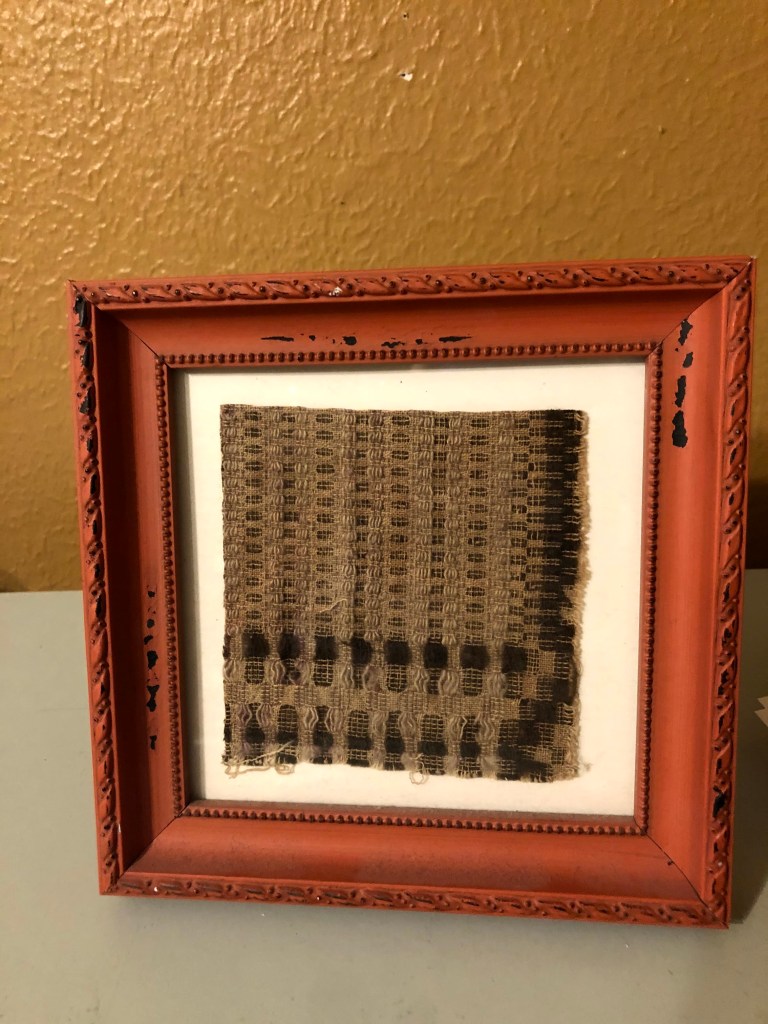
One of the first things I remember my mother having among her genealogical possessions was a very old piece of woven brown cloth.

This material, handed down now for six generations, was actually homespun by Theophilus himself. He made it for his granddaughter, Matilda Caroline Daniel, perhaps as a wedding gift for her marriage in 1851 (although the exact date the cloth was made is unknown). I wonder if the material was woven from thread spun from the wool sheared from Theophilus’ sheep.

Facts about Theophilus Daniel and his life are fairly sparse. His exact date of birth is unknown, and the truth is I have a lot more questions about him than answers:

  • Why was he skipping church in 1817? Was it due to a move or did he find himself feeling disconnected from the Lord?
  • What prompted him to form a church ten years later?
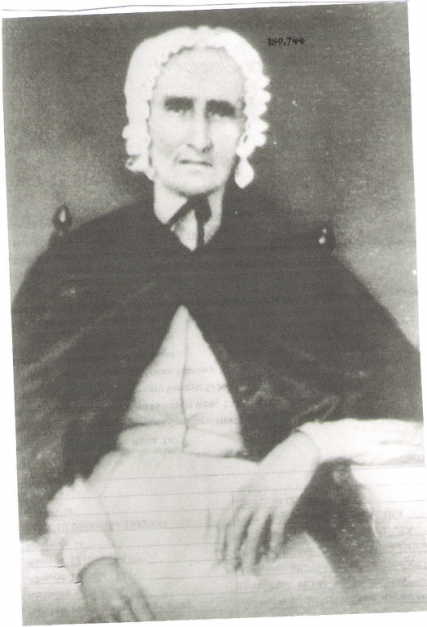
  • And what is that large growth on the side of his face?!

Yet, touching the cloth that he spun for his granddaughter suddenly makes this man leap off the old census records. A piece of cloth doesn’t get saved for 170+ years for no reason. It meant enough to his granddaughter that she passed it down to her children and grandchildren. It meant something to her because she loved her grandfather … probably, I’m imagining, because he loved her too.

Whatever the reason, Theophilus more than lived. He loved. And 155 years after his death, he is still remembered for it.

The memories of the righteous is a blessing … ~Proverbs 10:7